 Anthropomorphic sci-fi project
LTA DATA CARTRIDGE
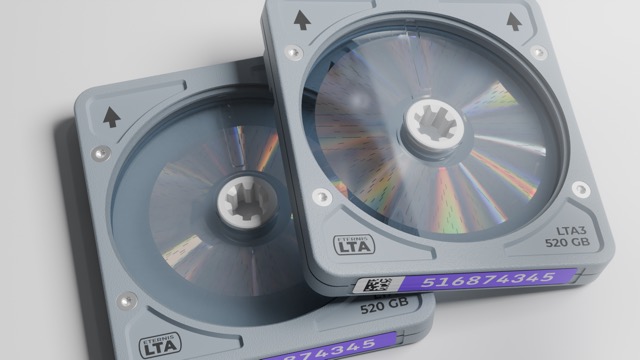
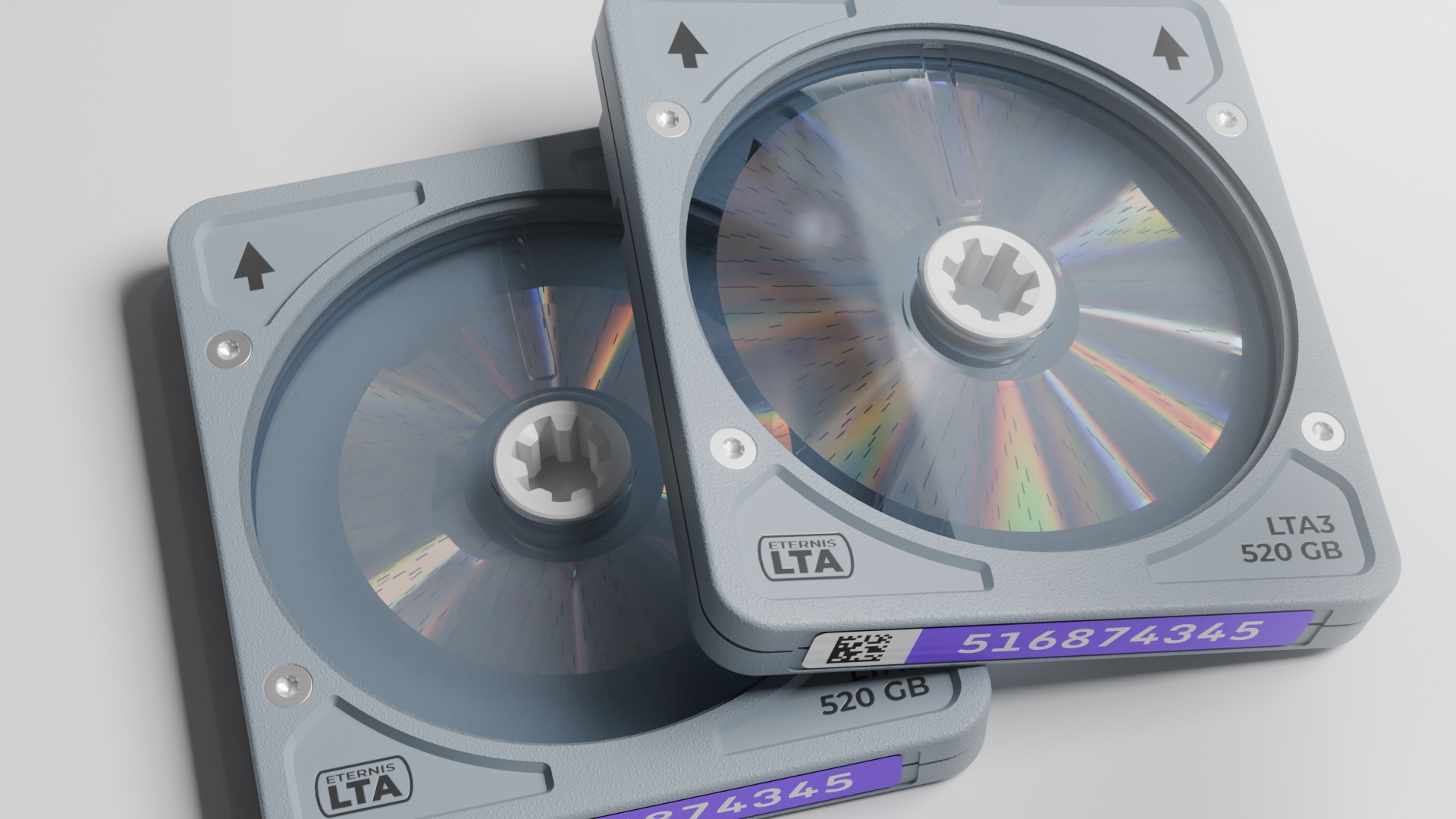
Nanoscale patterns etched into the data layer produce brilliant interference and diffraction effects.


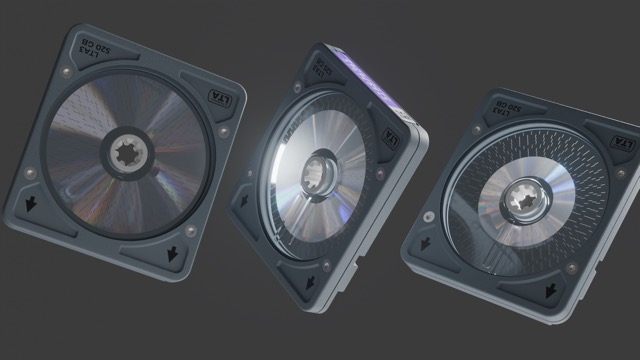
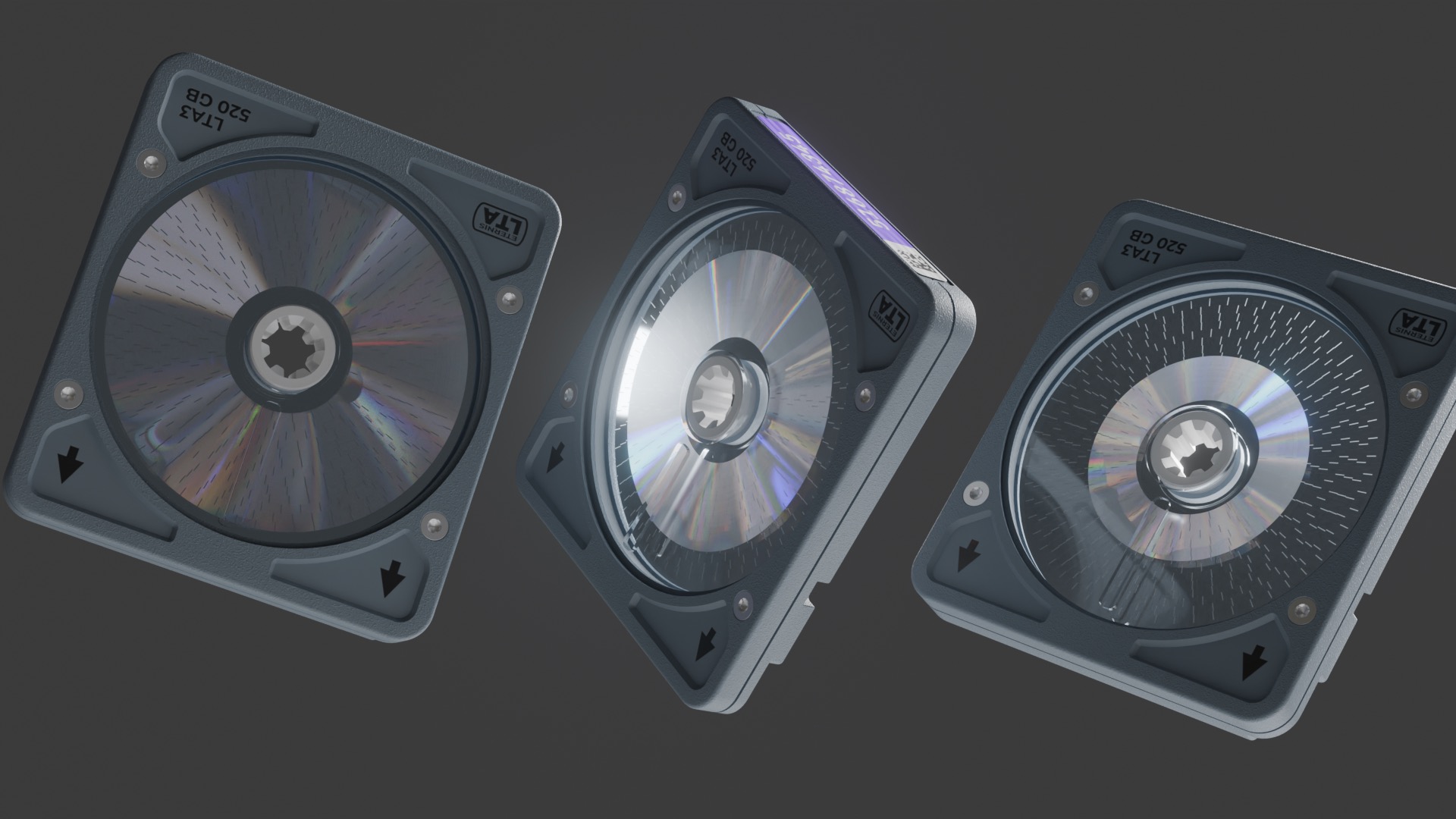
Sector markings are burned into the media at the time of manufacturing. With simpler encoding than data, all they do is catch the light.
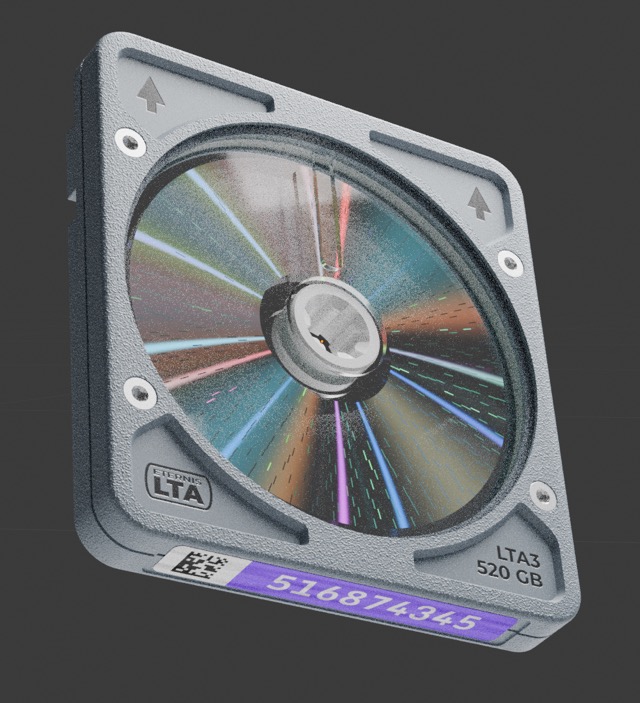
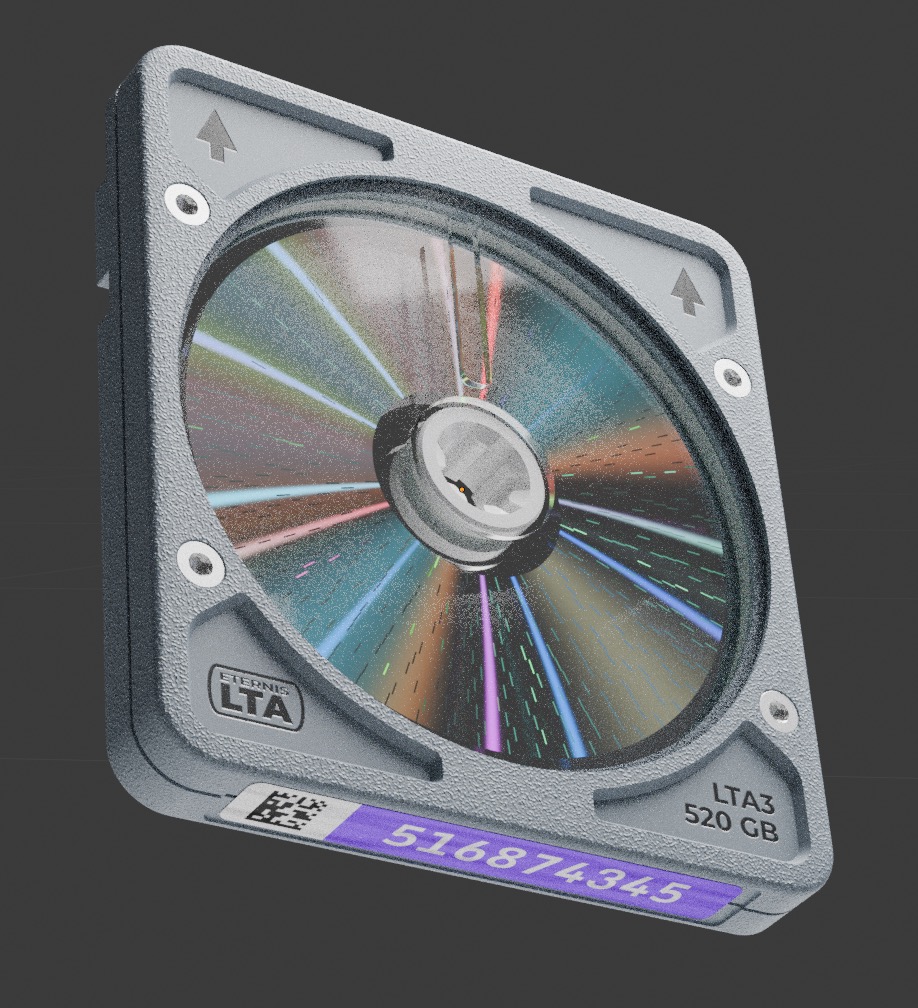
A WIP render, after I had added the sector markings but still relying on the rudimentary shader for the rainbow effect.
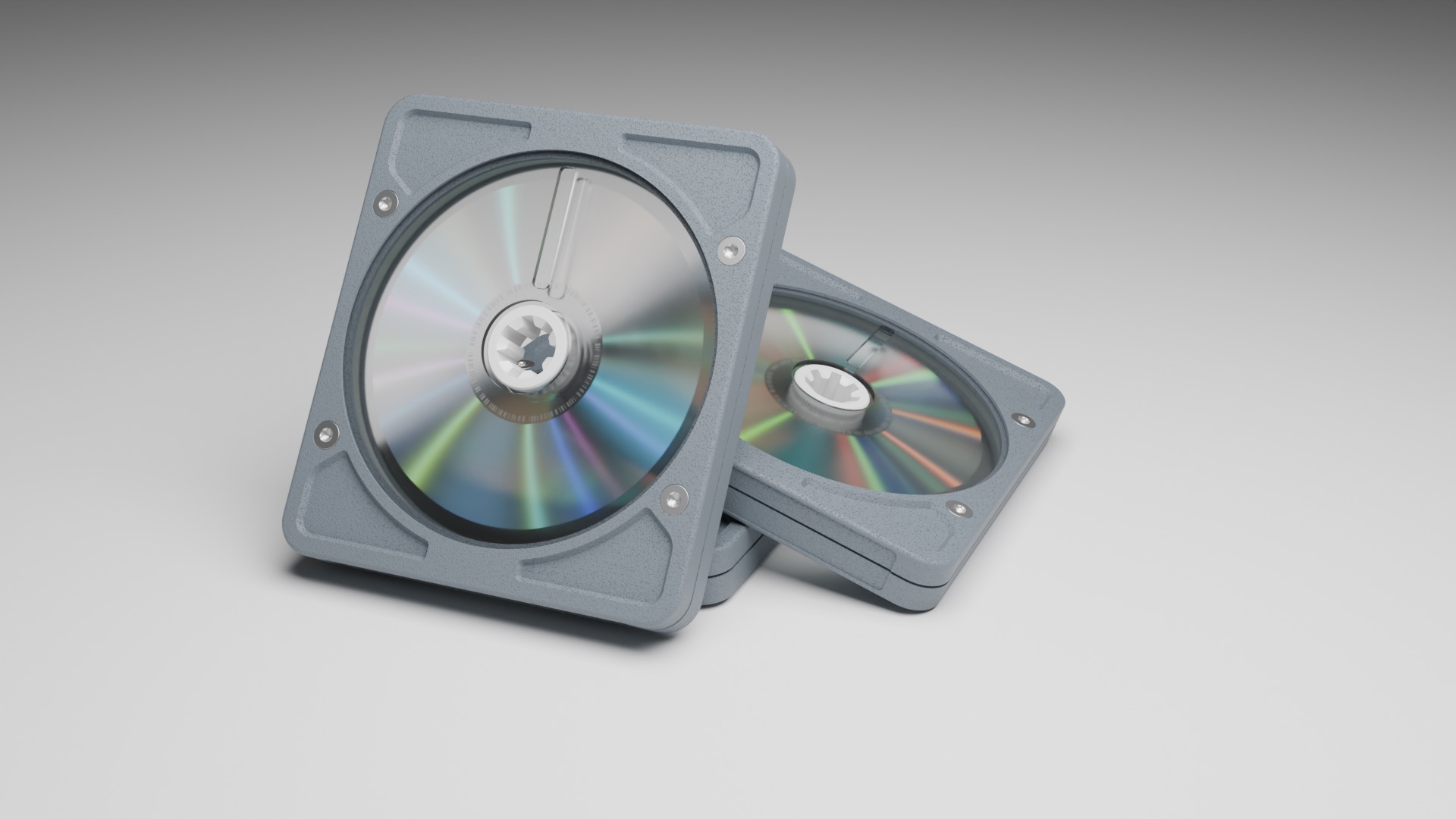
Early render of the textured plastic case. I hadn't yet worked out how to make the material properly photorealistic.
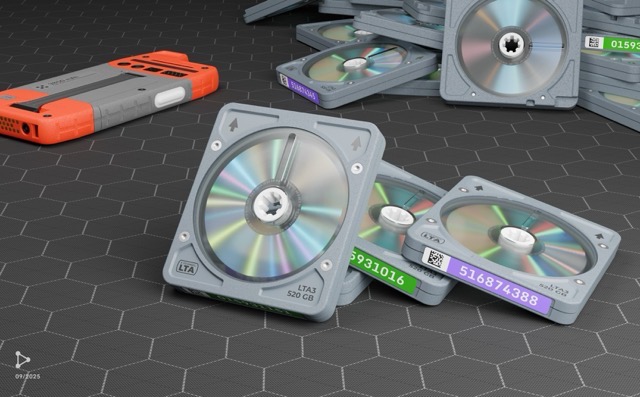
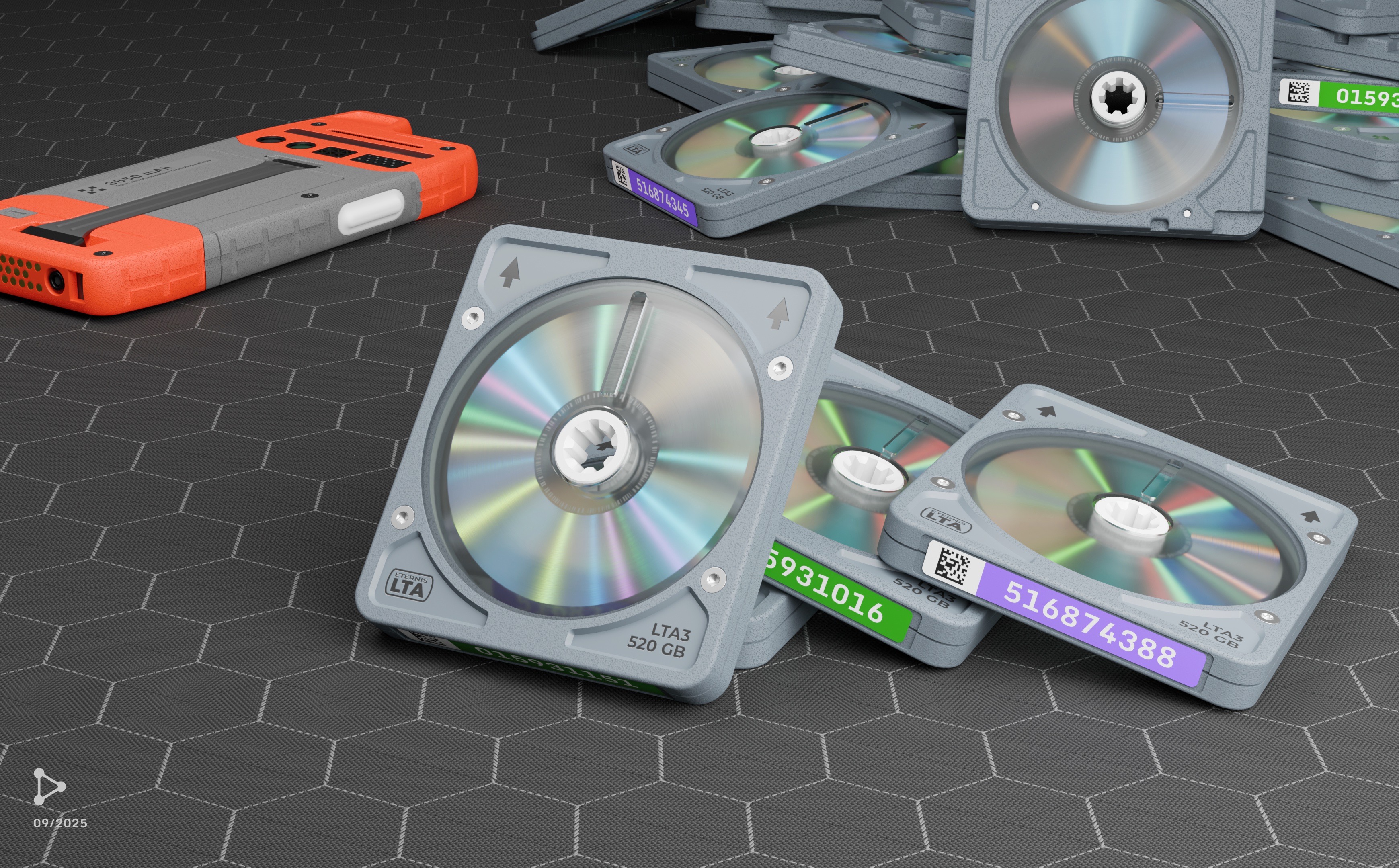
This more complex scene was where I really noticed there were problems. Most of the discs look nearly identical because of similar view angles.
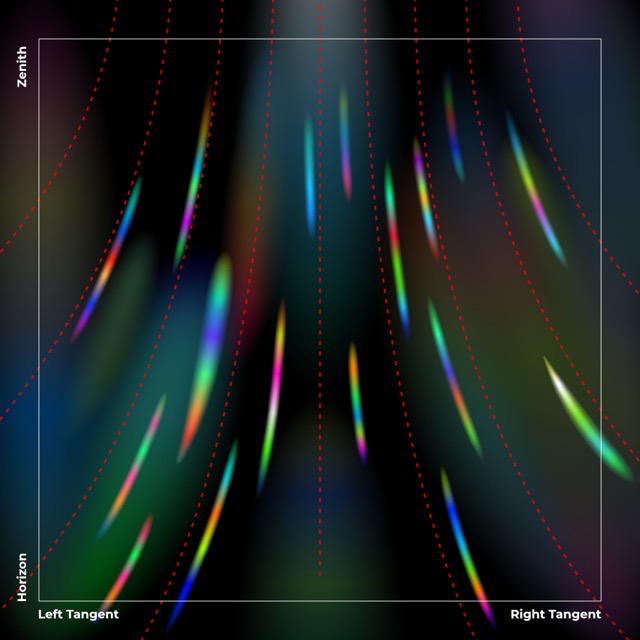
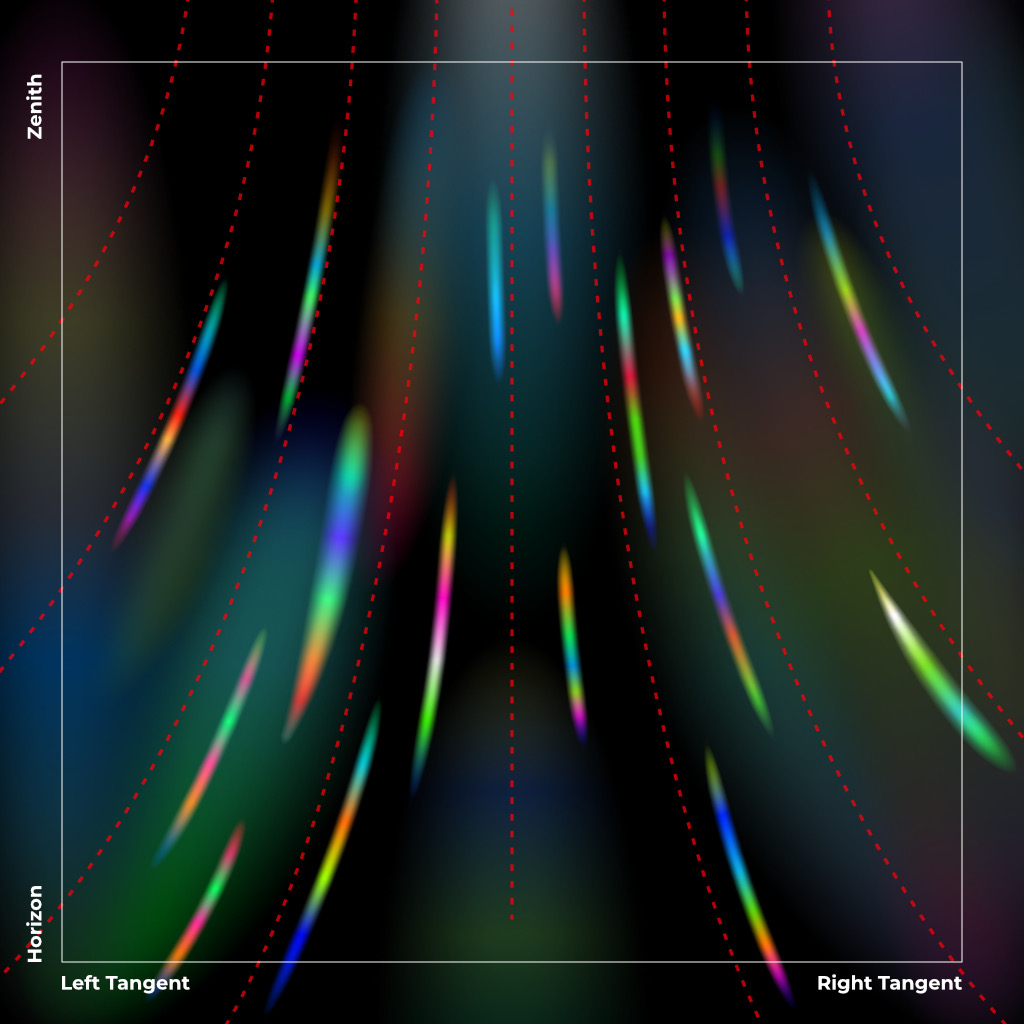
The original 2D lookup table, with each horizontal slice describing the pattern at a given viewing angle. I applied a hue shift in the actual shader, so it's hard to match to any of the renders featured here.
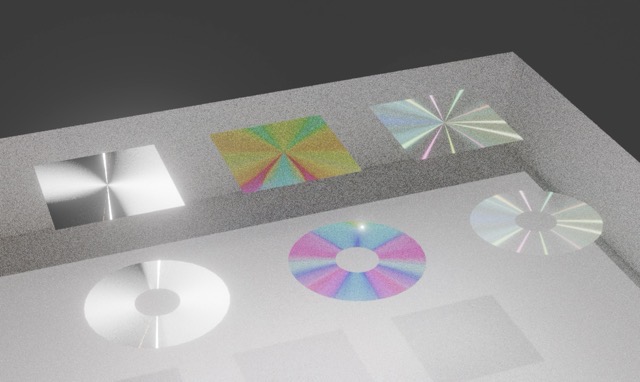
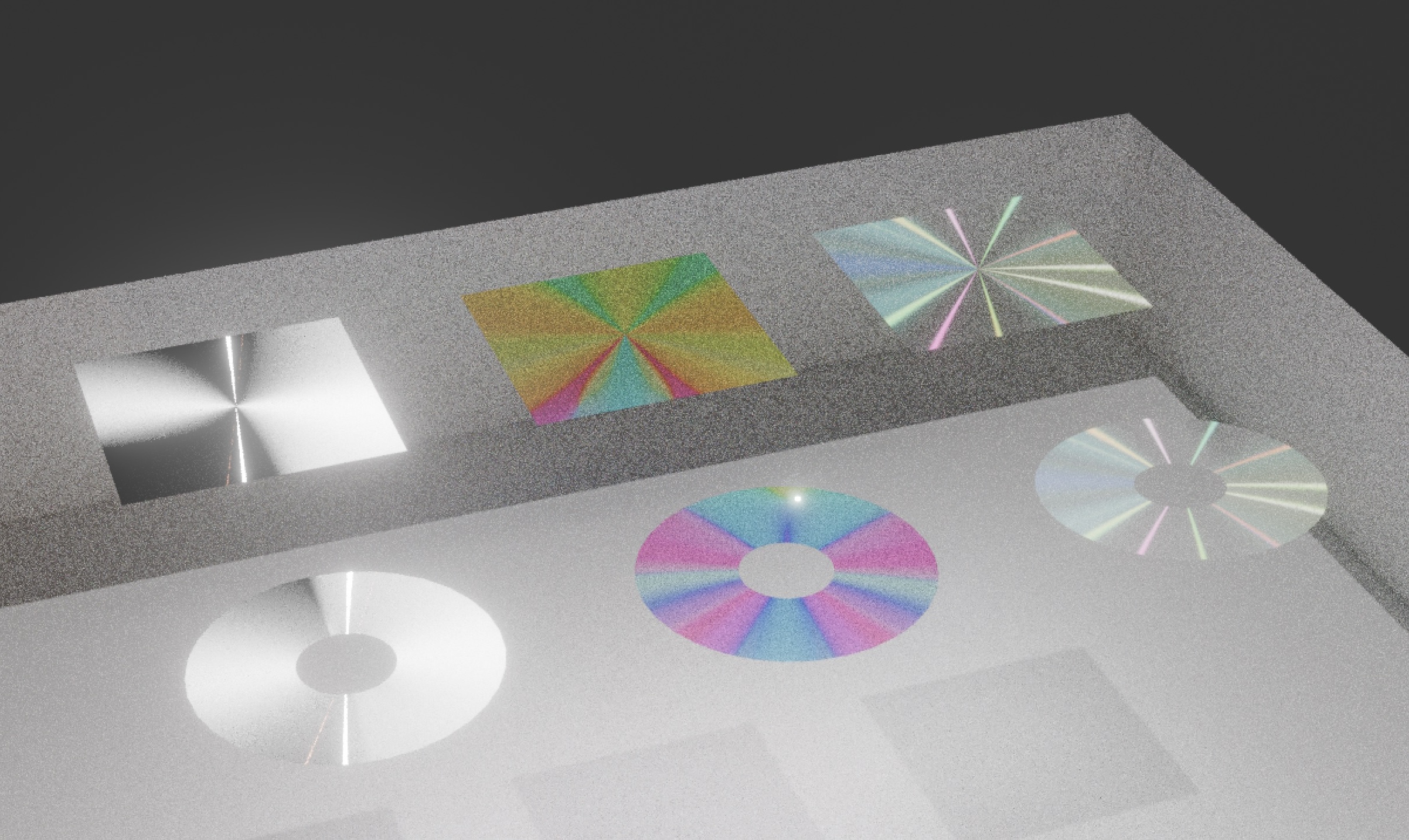
Attempting to build the effect I wanted using stock anisotropic shaders, typically meant for stuff like microscopic detail in metal.
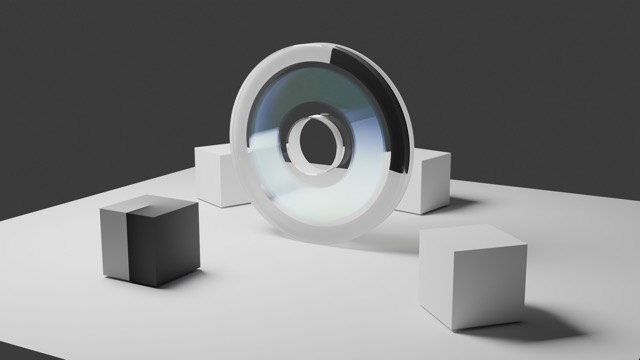
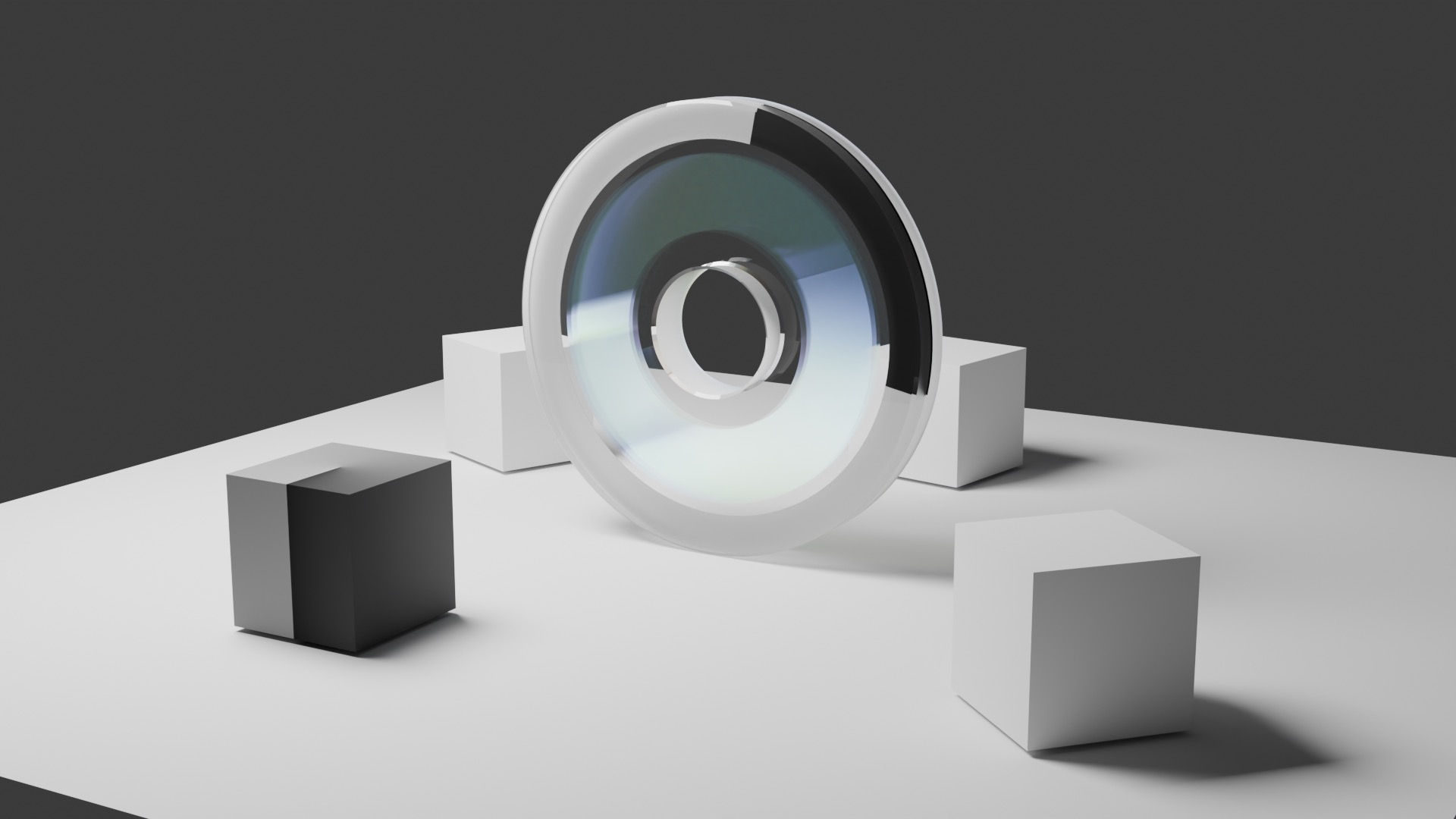
A very early concept for a futuristic data disc. I quickly abandoned this idea after seeing that it was far too slick and minimalistic to be a good fit for my setting.
In a technologically stunted world, data is expensive, and the hardware to process and store it even more so. Unlike our world of cloud streaming and solid-state everything, in this setting relatively cheap physical media is king, and it's dominated by a standard I've dubbed LTA (long term archive), playing off the real-world LTO (linear tape open) family of high-capacity archival magnetic tapes. The basic technology consists of a thin platter of fused silica (quartz glass) into which nanoscale patterns have been etched by a precisely controlled high-power laser. This general technique is actually something that's been experimentally demonstrated in real life, but not yet commercialized at any real scale. Even so, the state of this technology in the real world has already far surpassed anything the people of my setting were able to achieve.
 5D optical data storage (Wikipedia)
Design-wise, I mashed together features from a bunch of different types of media I liked. A durable integrated case that started out loosely reminiscent of a MiniDisc, a central spool very similar to audiocassettes, and on the data platter itself, visible sector markings somewhat similar to those on the optimistic but commercially-failed DVD-RAM standard (but unlike the ugly asymmetric pattern on a DVD-RAM, mine has an intricate threefold symmetry).
The hardest part about this, by far, was crafting the exotic optical behavior of the data layer inside the disc. Being an experimental technology, there isn't much reference imagery available of the real thing, and from what I could find, the effect tended to be kind of subtle and boring anyway. The striking rainbow effects of a CD or DVD come not from the data on them but from diffraction on a continuous spiral groove pressed into the polycarbonate substrate. My base media doesn't have that, so the radial patterns here come from the varying relative orientation of the nanostructures used to encode data. Light passing through or reflecting off that layer might be diffracted in any direction, with constructive and destructive interference producing different colors in every single direction.
Ray-tracing render engines cannot accurately model that behavior. It's critical for performance that they only do the work that's absolutely needed, and to achieve that, they actually work backward, starting at the camera and finding paths back to light sources. There's no simple way to portray an effect that depends on the precise angle of both your view and the incident light. I gave up on that approach and instead decided to just cheat, using just a bit of math to unravel the coordinates and then use a static texture as a lookup table to determine how and where it should appear to glow.
In isolation, it looked pretty good, but as soon as you put two of them next to each other, it became obvious that the effect was artificial. I couldn't let this defeat me, so I made another attempt, taking advantage of some newly-released shader features in Blender and a "stochastic sampling" technique reverse-engineered from someone else's work to get what I wanted by brute force. It was a tremendous challenge, but I think it was worth it.